Someone is searching for what you sell right now. They may never open Google first.
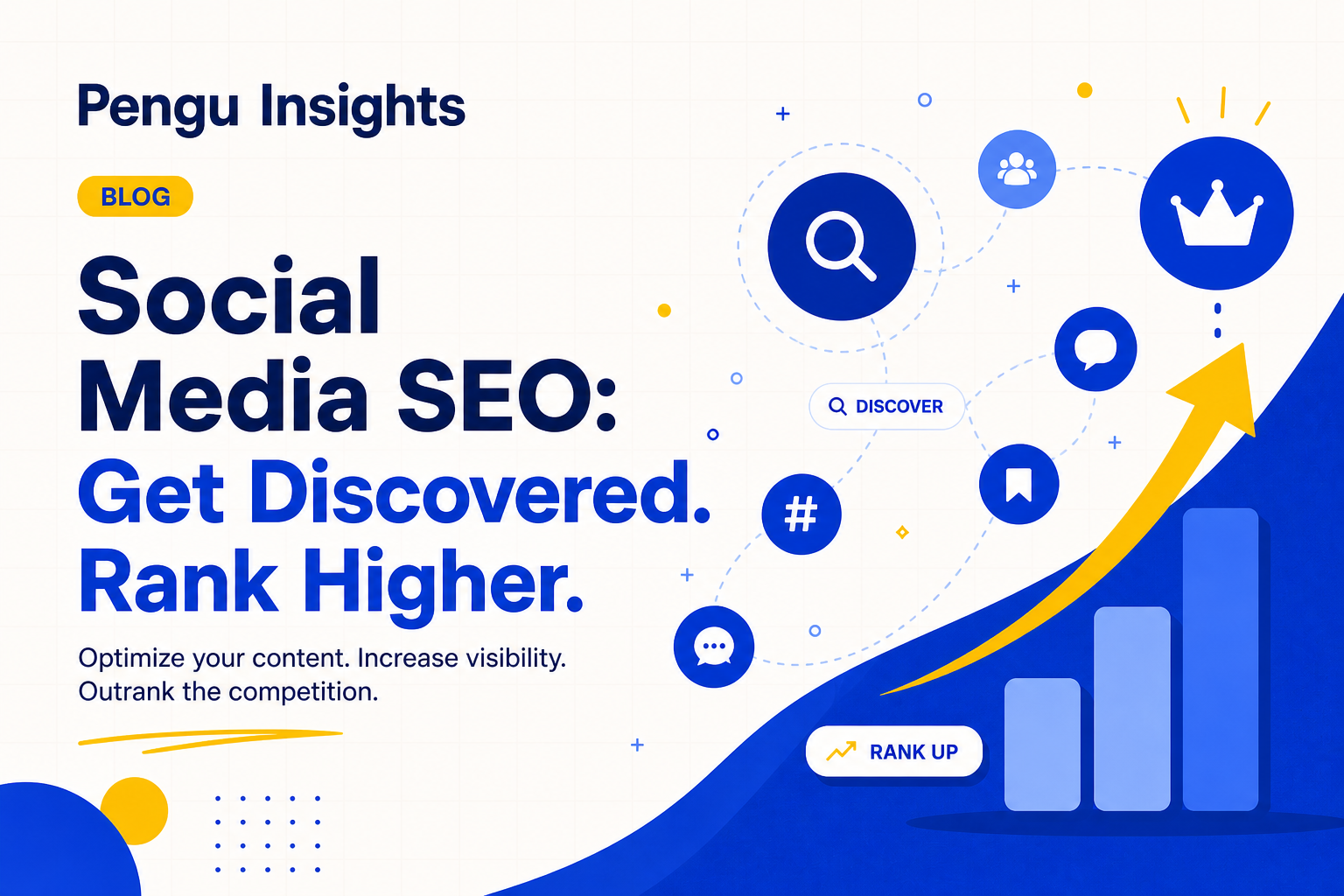
Rise at Seven's Multi-Channel Search Report 2025/26 analyzed 1.5 billion searches across commercial journeys and found Google at only 34.5% of search share, while YouTube (24%), Instagram (20.9%), and TikTok (16.7%) together captured more than 60% of discovery (Rise at Seven, 2025/26). That is the core of social media SEO in 2026: win discoverability on platforms and in Google, not just publish pretty posts.
This guide is a how-to. It is not a tools list. If you need software comparisons, use our social media analytics tools and social media monitoring tools roundups. Here we cover platform priority, feed discovery, question language, metadata, on-platform conversions, and Google measurement.
Key takeaways
- Social owns most commercial discovery. YouTube + Instagram + TikTok take 60%+ share vs Google's 34.5% (Rise at Seven, 2025/26).
- Feed discovery precedes search. Algorithms surface answers before intent is typed.
- People search in full questions. Match captions and on-screen text to those sentences.
- Structure is ranking fuel. Clear sections, subtitles, and descriptive metadata help platforms index you.
- Google now measures social posts. Connect platform properties in Search Console.
Are social platforms the new search engines?
In 2025/26, the average consumer used 3.6 platforms before purchasing, according to the same Rise at Seven multi-channel study (Rise at Seven, 2025/26). SEO that only targets blue links misses most of the journey. Social platforms are where search starts for billions of people, especially younger buyers who prefer video answers over static pages.
Not every network deserves equal time. People search Instagram and YouTube daily. Facebook and TikTok search often lands weekly. LinkedIn search is more monthly, so B2B teams need consistency over spikes. Match platform to demographic: younger audiences lean TikTok and Instagram; older audiences lean YouTube and Facebook.
Treat every caption like a title tag. If a stranger typed your problem into Instagram search, would your post be the obvious result? If not, rewrite the hook before you shoot.
For AI-era search beyond social, see what is generative engine optimization (GEO).
How does discovery start in the feed, not the search bar?
In 2026, algorithms often surface solutions before users verbalize intent. That flips classic SEO. You still need searchable language, but you also need scroll-stopping clarity in the first seconds. Tutorials, unboxings, side-by-side comparisons, and quick fixes win because they answer a problem on contact.
Practical rules (15 minutes per asset):
- Lead with the outcome, not the brand.
- Use a question-based hook that mirrors spoken language.
- Put the core phrase on screen so vision models and humans both get it.
- Deliver the useful step early. Save fluff for nowhere.
If the algorithm cannot tell what you solved in three seconds, it will not learn who to show you to. Feed SEO and search SEO are the same content job with different entry points.
How do people really search on social in 2026?
People type full situations, not single keywords. Examples: "how do I fix dry skin in winter," "best project management tool for small teams," "how to budget with inconsistent income." Platforms index captions, on-screen text, and spoken words against that language. Generic slogans stay invisible.
Demand for non-Google SEO education is rising fast. Rise at Seven reported year-over-year growth like TikTok SEO +171%, YouTube SEO +108%, Social SEO +99%, and Instagram SEO +85% in search interest for those terms (Rise at Seven, 2025/26). Marketers are chasing the behavior shift. Your content should chase the query wording.
Caption rewrite example (5 minutes)
- Weak: "Transform your skin with this amazing routine."
- Strong: "How to fix dry skin in winter: 3 dermatologist-approved tips."
Build a weekly question list from autocomplete, competitor posts, and tools like AnswerThePublic or UberSuggest. Then film answers in conversational demos, not ads dressed as tutorials.
What metadata and structure make social content indexable?
In 2026, algorithms skim social video the way humans skim a web page. They look for headlines, sections, key phrases, captions, and spoken words. Unstructured content is hard to classify, so it stays under-distributed.
Checklist before publish (10 minutes):
- Descriptive title or first caption line with the target question
- Section breaks or bullets in the caption
- Burned-in or auto captions for spoken words
- On-screen text that restates the main promise
- Hashtags only as supporting context, never as the whole strategy
- Alt text and cover frames that describe the topic clearly
YouTube already indexes spoken content deeply. Instagram and TikTok increasingly reward the same clarity. Structure is not "corporate." It is how machines understand you.
For channel-specific depth on video discovery, continue with YouTube SEO in the AI era.
Do on-platform transactions affect social SEO reach?
Yes. Platforms reward retention. Instagram boosts native checkout behavior. TikTok Shop purchases keep users in-app. YouTube product tagging pulls commerce into watch sessions. When users leave for an external landing page, platforms often read an exit signal. When they buy, save, or complete a lead form inside the app, platforms read value.
Tactics that help (20 minutes to set up):
- Tag products natively when commerce fits.
- Use DM automation for soft offers ("comment GUIDE").
- Prefer native lead forms when list growth is the goal.
- Save hard website pushes for warm audiences that already trust you.
This does not kill your site SEO. It changes the first conversion surface. Social SEO and CRO now share the same retention math.
How do you measure social SEO on Google in 2026?
On July 7, 2026, Google Search Console introduced platform properties for Instagram, TikTok, X, and YouTube, so creators can track Search and Discover performance without owning a website (Search Engine Journal, 2026; Big Sea, 2026). That closes a measurement gap that made social SEO feel fuzzy.
Setup path (15 minutes):
- Open Search Console and add a platform property.
- Authorize the social account.
- Review Queries and top posts weekly.
- Rewrite future hooks around the query clusters that already impress.
Also watch competitor social search presence. If rivals own the "how to" queries in your niche on Instagram or TikTok, that is a competitive intelligence problem as much as a content problem. Map their top searchable posts the same way you map competitor landing pages. Our analyze competitor website framework still applies: inventory, compare language, find gaps, publish the clearer answer.
How should B2B and B2C teams prioritize platforms differently?
In 2026, channel priority still follows audience behavior, not vanity follower counts. B2C teams should treat Instagram and YouTube as daily search surfaces, then TikTok for younger cohorts. B2B teams should lean LinkedIn and YouTube, accepting lower search frequency and compensating with weekly consistency. Fashion, beauty, and food often skew Instagram-heavy in multi-channel studies, while how-to and product education lean YouTube (Rise at Seven, 2025/26).
A practical split for a 10-hour content week:
- B2C: 4 hours Instagram/TikTok question videos, 3 hours YouTube depth, 2 hours caption and metadata QA, 1 hour competitor query review.
- B2B: 4 hours LinkedIn carousels and posts with searchable headlines, 4 hours YouTube explainers, 2 hours competitor topic mapping.
Do not clone the same asset blindly across networks. Rewrite the hook to match how people search on that platform. LinkedIn queries sound more professional. TikTok queries sound more conversational. YouTube queries often include "how to," "vs," and "review."
When we audit agency calendars, the most common social SEO miss is publishing the same caption everywhere. Platforms index different language. One master script with platform-specific first lines usually beats five unrelated posts.
How do AI assistants change social media SEO?
AI answer engines increasingly pull from social sources when users ask product and how-to questions. That raises the value of clear, quotable social explainers, not only Google-ranked blogs. If your competitors publish sharper demos on TikTok or Reddit-adjacent discussions get cited more than your site, you lose the recommendation moment before the click.
Use AI internally as a drafting aid for question lists and caption variants. Do not outsource judgment. Verify phrases with autocomplete and Search Console. For the broader AI citation layer beyond social, read what is generative engine optimization (GEO) and how to dominate AI search results.
What should you do next for social media SEO?
Pick one platform where your buyers already search. Ship five question-led videos this week. Match hooks, captions, and on-screen text. Connect Search Console platform properties. Review queries every Monday.
Want a live walkthrough of AI workflows for marketing discovery and competitive research? Join penguinsights.io/webinar/marketing-ai.
Related reads: YouTube SEO AI new rules, social media analytics tools, social media monitoring tools, and GEO explained.
To see which of your competitors' posts rank and get engagement across Instagram, TikTok and LinkedIn, use the Social Benchmark in Pengu Insights. Free plan, no card.
Frequently asked questions
What is social media SEO in 2026?
Social media SEO is the practice of structuring captions, titles, hooks, on-screen text, and spoken words so Instagram, TikTok, YouTube, LinkedIn, and Google can understand and surface your content in search and feeds. It is how-to discoverability work, not a tools list. You optimize language and structure the same way you would for a web page.
Is social media SEO different from social media analytics?
Yes. Analytics measures what already happened on your accounts. Social media SEO decides whether people can find you through search queries and algorithmic discovery in the first place. Use analytics after you publish. Use SEO before you write the hook and caption. For tool comparisons, see our analytics and monitoring roundups.
Which platforms matter most for social SEO?
For B2C, prioritize Instagram and YouTube for daily search behavior, then TikTok. For B2B, prioritize LinkedIn and YouTube with consistent publishing. Rise at Seven's 2025/26 multi-channel study found YouTube, TikTok, and Instagram together capturing more than 60% of discovery share across commercial keywords, with Google at 34.5%.
Do Instagram and TikTok posts rank on Google?
Yes, increasingly. Public Instagram content from eligible professional accounts became more crawlable for Google, and in July 2026 Google Search Console added platform properties so you can track Instagram, TikTok, X, and YouTube performance in Search and Discover. Treat social posts as indexable assets, not disposable feed filler.
How do I find keywords for social media SEO?
Use platform autocomplete, native search suggestions, AnswerThePublic-style question maps, and competitor captions that already rank. Write full questions people type, not brand slogans. Put the question in the hook, on-screen text, and caption. Then verify with Search Console platform properties once connected.
Written by

Founder of Pengu Insights. Competitive intelligence practitioner for DTC brands and marketing agencies.