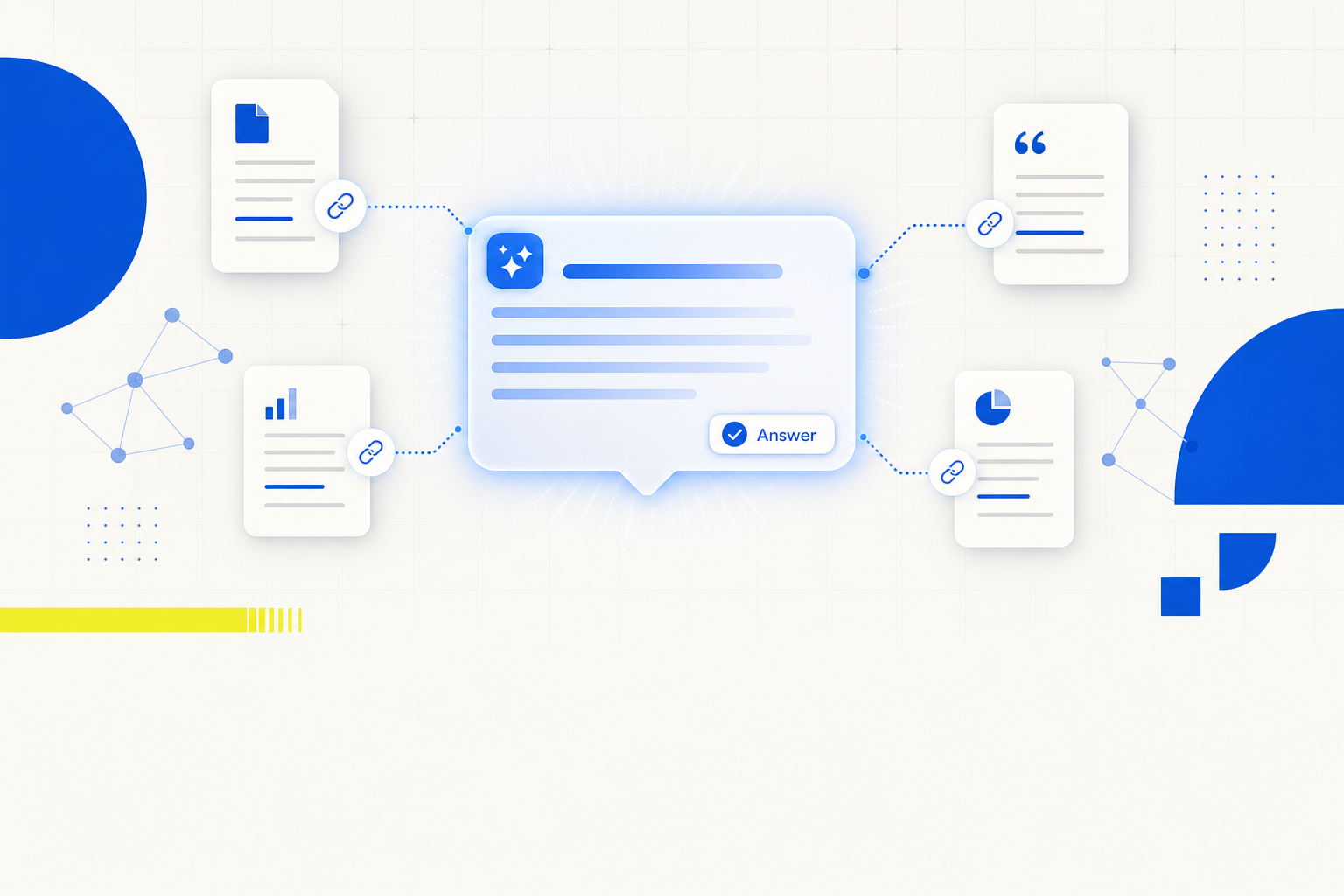
What is generative engine optimization? Classic SEO fights for blue links. Generative engine optimization (GEO) fights for something different: becoming part of the answer itself when someone asks ChatGPT, Perplexity, Gemini, Claude, or Google AI Overviews a question about your category.
In industry discussions around GEO education content, including this plain-language walkthrough of generative engine optimization, the core shift is simple. Search used to send people to your page. AI engines increasingly summarize the market for them. If your competitors get cited and you do not, you lose the recommendation moment before the click ever happens. That is a competitive intelligence problem as much as an SEO problem.
Key takeaways
- GEO = citation inside AI answers, not only ranking in blue links.
- SEO still matters. Technical health, authority, and crawlability feed generative engines.
- Clear Q&A, comparisons, and real opinions travel better into AI answers than vague marketing copy.
- Watch competitors in ChatGPT and Perplexity. Who gets named is the new share-of-voice signal.
- Traffic can fall while brand visibility rises. Measure mentions and citations, not clicks alone.
What is generative engine optimization (GEO)?
In 2026, GEO means structuring your public presence so AI answer engines can extract, trust, and cite you when they assemble a response. The educational framing in GEO explainers is consistent: SEO gets you onto the results page; GEO gets you into the generated paragraph buyers actually read.
Think of it as answer-engine visibility. ChatGPT, Perplexity, Claude, Gemini, and AI Overviews do not only point. They synthesize. They pick sources that look clear, credible, and easy to quote. Your job is to become one of those sources for the questions that matter in your market.
In our competitive audits, the first GEO question is not "Do we rank?" It is "When a buyer asks an AI which tools, agencies, or brands to trust in our category, whose names appear, and why?"
That lens changes the brief. You are no longer only optimizing pages for crawlers. You are optimizing evidence for models that summarize markets in seconds.
How is GEO different from SEO?
SEO and GEO share foundations, but they optimize for different outputs. SEO still wins when a human scans ten blue links. GEO wins when an AI answer names your brand, quotes your framework, or lists you in a short set of recommended options.
| Dimension | Classic SEO | Generative engine optimization (GEO) |
|---|---|---|
| Primary goal | Rank in search results | Get cited inside AI answers |
| User experience | Click a blue link | Read a synthesized answer |
| Success signal | Impressions, clicks, rankings | Mentions, citations, share of AI answers |
| Content bias | Keywords + intent match | Clear answers, comparisons, opinions, proof |
| Still required | Technical SEO, authority | Technical SEO, authority, plus extractable structure |
Do you still need technical SEO? Yes. Clean HTML, fast pages, indexability, and authority signals remain the raw material generative systems lean on. GEO does not cancel Bing or Google work. It raises the bar for how clearly that work is packaged.
If you already analyze competitor websites for messaging and SEO overlap, add one more layer: which of their pages are written like quotable answers? Those pages are often the ones AI engines can reuse.
Why should competitive intelligence teams care about GEO?
Because AI answers are becoming a public shortlist. When Perplexity or ChatGPT recommends three tools, those three names just won a high-trust consideration slot. If your competitor is on that shortlist and you are not, the buyer may never visit your site.
In our experience running competitive intelligence for DTC brands and agencies, this shows up as a quiet loss. Organic sessions look "fine." Paid social still runs. Meanwhile, the market narrative inside AI tools is already favoring someone else. That is why GEO belongs next to social media monitoring and social analytics: you are tracking who owns the conversation, not only who owns the click.
Practical CI questions to ask every month:
- Which competitors get named for your top 20 category questions?
- Which URLs or review sites do AI engines cite as proof?
- Are you missing from comparison queries where rivals appear?
- Did a new listicle, review, or case study change the answer set?
Treat AI answers like a live competitor brief. Screenshot the responses. Log who is cited. Then reverse-engineer the sources feeding that narrative.
What content formats help you win generative engine optimization?
GEO explainers often highlight the same pattern: AI systems prefer content that answers a question cleanly, compares options honestly, and states a real point of view. Soft, slogan-heavy pages are harder to quote. Structured, specific pages are easier to lift.
Formats that tend to travel into AI answers
- Q&A and FAQ blocks that match real buyer questions
- Comparison tables with concrete criteria, not fluff
- Opinionated expert takes with reasons, not empty praise
- How-to sequences with clear steps and time estimates
- Original frameworks that give models a named concept to cite
- Reviews and third-party proof that reinforce trust signals
Formats that usually underperform
- Thin listicles with no criteria
- Marketing pages that never answer the question in the first paragraph
- Content locked behind heavy scripts or broken HTML
- Duplicate pages that dilute authority across near-identical URLs
Answer-first writing helps both humans and models. Open with the conclusion. Support it with evidence. Close with the next action. That structure is extractable.
Schema and FAQs help too. They make intent explicit. They do not guarantee citation, but they reduce ambiguity for systems trying to map questions to answers.
What about local GEO?
Local GEO is the same idea applied to place-based discovery. If a buyer asks an AI for the best agency, clinic, or store near them, engines lean on Google Business Profile signals, reviews, listicles, and consistent NAP data (name, address, phone).
For local brands, the checklist is practical:
- Keep GBP complete and current
- Earn and respond to reviews
- Appear in relevant local listicles and directories
- Keep NAP consistent across the web
- Publish local Q&A pages that match how people ask for help nearby
National SaaS brands still learn from this. Reviews, directories, and third-party mentions act like trust ballast. Generative engines notice consensus.
Can traffic drop while GEO visibility grows?
Yes. That tradeoff shows up often in GEO conversations. If AI Overviews or chat answers satisfy the query, fewer people click through. Your branded visibility can still rise because the answer names you.
So what do you measure?
- Classic SEO: rankings, clicks, conversions
- GEO: brand mentions in AI answers, citation frequency, competitor share of answers, branded search lift after being cited
Do not panic at a traffic dip without checking answer-engine presence. The channel mix is shifting. Some visits become assisted brand demand later.
GEO action checklist: what should marketers do first?
Start with visibility and evidence, then fix the content gaps. A practical 90-minute sprint looks like this.
1. Audit your brand in AI engines (20 minutes)
Ask the same 10-15 category questions in ChatGPT, Perplexity, Gemini, and Google with AI Overviews on. Record whether you appear, who else appears, and which sources get linked or named.
2. Map competitor citation sources (20 minutes)
Note the listicles, reviews, docs, and comparison pages feeding those answers. Those pages are now competitive assets. Prioritize where you can earn inclusion or publish a stronger original alternative.
3. Upgrade extractable content (30 minutes)
Rewrite key pages into answer-first Q&A. Add comparison tables. Publish clear opinions with reasons. Add FAQ schema where it fits. Keep HTML clean and readable without heavy client-side rendering for core text.
4. Protect classic rankings (10 minutes)
Keep winning on Google and Bing for your money terms. GEO rides on authoritative, discoverable sources. Letting technical SEO rot is a GEO tax.
5. Monitor monthly (10 minutes)
Re-run the question set. Track mention share. Pair it with social and ads competitive tracking so you see the full narrative across search, AI answers, and social proof.
Want a broader marketing AI workflow beyond GEO alone? We walk through practical playbooks in our Marketing AI webinar.
How we think about GEO inside competitive intelligence
GEO is not a buzzword contest. It is a new surface where buyers form shortlists. In CI terms, you now track three recommendation layers:
- Search layer: who ranks
- Answer layer: who gets cited by AI engines
- Social proof layer: who shows up in content, reviews, and ads that reinforce trust
Most teams still over-index on layer one. The gap is layer two. Closing it means publishing quotable expertise and watching competitors the same way you already watch their social and ad moves.
If a competitor suddenly appears in every AI shortlist for your category, dig upstream. Find the listicle, review roundup, or comparison page that changed the source mix. Then decide: earn a place there, or publish a stronger primary source.
To measure your citation share across a keyword set and see who owns the answers today, use the AI Visibility Tracker in Pengu Insights. Free plan, no card.
Frequently asked questions
What is generative engine optimization (GEO)?
GEO is the practice of making your brand easy for AI answer engines to find, trust, and cite inside generated responses. Unlike classic SEO, the goal is inclusion in the answer itself, not only a blue link on a results page.
How is GEO different from SEO?
SEO optimizes for ranking in search results. GEO optimizes for being referenced inside AI-generated answers from tools like ChatGPT, Perplexity, Gemini, Claude, and Google AI Overviews. Strong technical SEO and authority still matter for both.
Does GEO replace traditional SEO?
No. Most AI systems still lean on crawlable, authoritative pages. If you abandon rankings on Google and Bing, you usually weaken the source pool AI engines pull from. Treat GEO as a layer on top of SEO, not a replacement.
What content formats work best for GEO?
Clear Q&A pages, comparison tables, opinionated expert takes, FAQ schema, and clean HTML tend to travel well into AI answers. Vague marketing copy and thin listicles without real viewpoint are weaker citation candidates.
How do I measure GEO success?
Track brand mentions and citations inside ChatGPT, Perplexity, Gemini, and AI Overviews for your core queries. Pair that with organic rankings and branded search. Traffic can dip while visibility inside answers rises, so measure both.
Make GEO part of your monthly CI rhythm
Pick your top 15 buyer questions this week. Run them through the major AI engines. Log who gets cited. Fix one page so it answers better than the sources currently winning. Then re-check next month.
GEO rewards clarity, proof, and consistency. The brands that win are not always the loudest. They are the easiest for answer engines to trust and quote.
Related reads: how to analyze a competitor website, social media monitoring tools, and social media analytics tools. For a broader AI marketing walkthrough, join the Marketing AI webinar.
Written by

Founder of Pengu Insights. Competitive intelligence practitioner for DTC brands and marketing agencies.