Manual site audits still burn agency hours. An AI SEO audit workflow in n8n cuts the collection to minutes. A senior SEO spends 45 to 90 minutes collecting Lighthouse scores, keyword tables, crawl notes, and a slide deck clients will skim. In 2024, the HTTP Archive reported that only about 47% of sites passed Core Web Vitals on mobile in the CrUX-based dataset (HTTP Archive Web Almanac, 2024). That means more than half of the web still fails the performance bar Google already uses. Agencies need a faster diagnostic layer, not another spreadsheet ritual.
This guide shows how to build an AI-assisted website SEO audit workflow in an n8n-style stack. You will wire a form trigger, SEO data APIs, Lighthouse, an LLM agent, and a Telegram or email delivery step that ships a client-ready report. The goal is ops speed with clear human gates. For content production automation, see our separate guide on an SEO automation system with AI agents. Here we focus on auditing pages you already have.
Key takeaways
- Automate diagnosis, not strategy. Agents collect scores and draft fix tips. Humans prioritize and sell the roadmap.
- More than half of sites still miss Core Web Vitals on mobile in Web Almanac data (HTTP Archive, 2024). Performance belongs in every intake audit.
- Stack pattern: form input → session ID → business context agent → ranked keywords → Lighthouse → dual report (exec + technical) → PDF or chat delivery.
- Use two report modes. Clients get a short summary. Developers get the full technical appendix.
- Pair audits with competitive context. Keyword lists without rival angles stay generic. Link findings to competitor website analysis.
Why should agencies automate SEO audits in 2026?
In 2026, audit automation matters because intake volume and AI search pressure hit at once. Google Search Central still treats page experience and technical health as hygiene that supports ranking systems, not a silver bullet (Google Search Central, page experience). Teams that still hand-build every audit lose margin on discovery calls. An automated first pass frees strategists for gap analysis and competitive positioning.
Agencies also face clients who already saw a free tool score of 32 and want answers today. Your workflow should match that urgency with a branded report in minutes. Keep the human review before anything goes to a paying account. Automation without a gate creates confident wrong advice.
A 32 performance score with a 25-second Largest Contentful Paint is not a "nice to have" ticket. It is a revenue leak. Ship the number early, then spend human time on which fixes move conversion, not on copying Lighthouse into slides.
What does an AI SEO audit workflow include?
A complete page SEO and performance audit should answer five questions in one artifact. In 2025, Google continued to emphasize Core Web Vitals as a practical performance signal set for real-user experience (web.dev / Chrome, Core Web Vitals). Your workflow should surface those metrics next to SEO and accessibility scores so clients see one story, not three PDFs.
Report sections that clients actually use
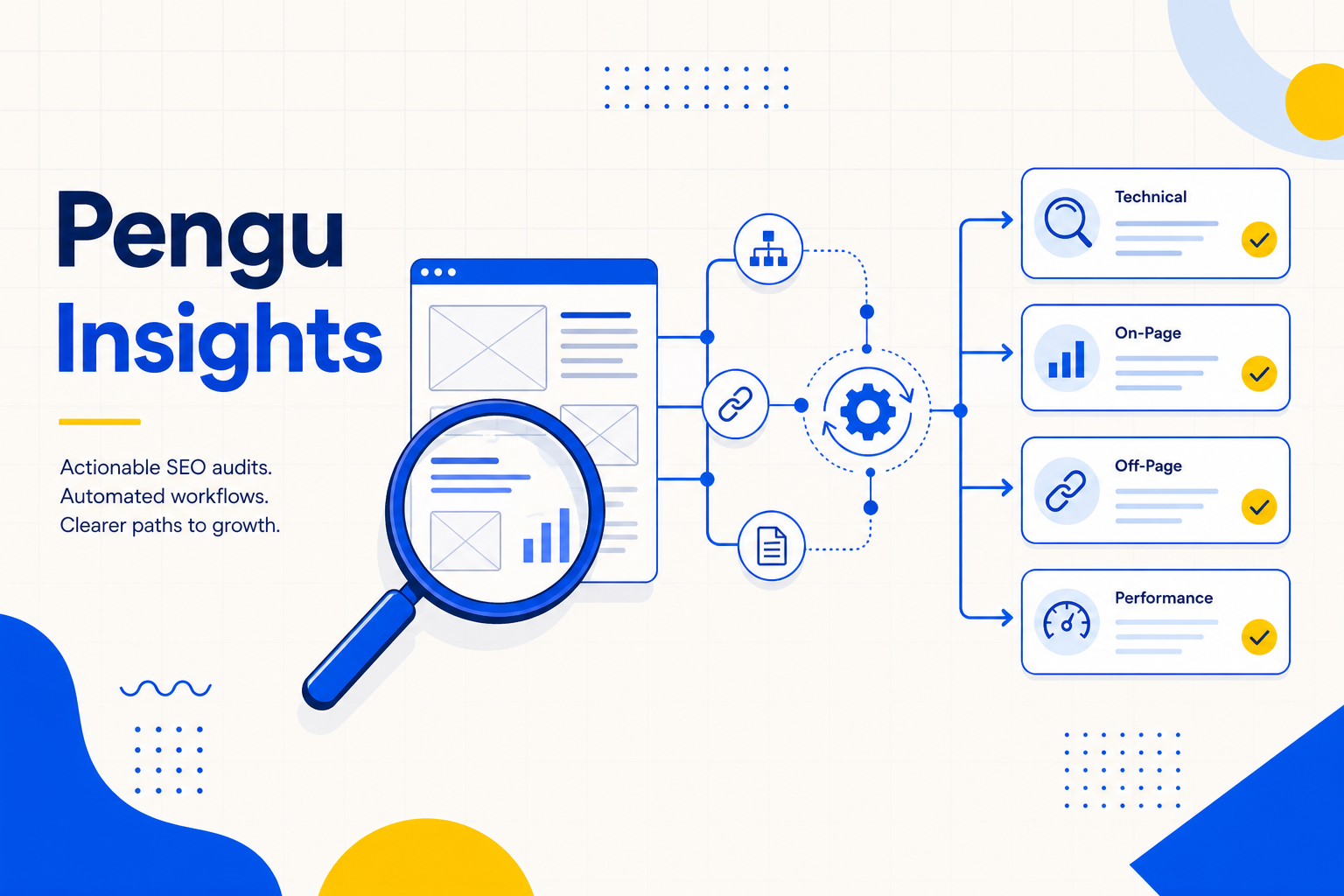
- Score strip: Performance, accessibility, SEO (and best-practice if available).
- Core Web Vitals: LCP, INP or CLS as returned by your Lighthouse run, with plain-language impact.
- Business overview: What the site sells, audience, brand tone, primary competitors.
- Technical health: Crawlability, robots, index signals, AI-crawler readiness notes.
- Ranked keywords: Volume, intent, difficulty, CPC bands, trend where the API provides them.
- Detailed technical audit: Prioritized fixes with links to Chrome or Google docs.
- Delivery: PDF download plus optional Telegram or email ping.
Two report skins help. A minimal executive view for founders. A full technical appendix for developers. Same data. Different length.
How do you build the n8n-style audit pipeline step by step?
In our experience, the durable pattern is form → normalize locale → agent research → keyword pull → Lighthouse → compose → notify. Google's own Lighthouse project remains the open baseline for lab performance and many SEO checks (Google Chrome Lighthouse). Build around that, then add commercial SEO APIs for ranking data.
Step 1: Form trigger (5 minutes)
Collect URL, country, and language. Map country and language to the codes your SEO API expects. Generate a session ID per run so you can log outputs in a table and chain follow-up workflows later.
Step 2: Business context agent (10 to 20 minutes setup)
Give the agent tools: a strong model (for example Gemini 2.5 Pro), a think step, web search (Perplexity or similar), and a page scrape tool (Firecrawl or equivalent). Prompt it to return website description, target audience, brand personality, primary competitors, and People Also Ask style questions. Write the row into a data table. That row becomes reusable context for content and sales workflows.
Step 3: Ranked keywords API (API credentials, then seconds per run)
Pull keywords the domain or URL currently ranks for. Request volume, intent, difficulty, competition, CPC ranges, and monthly or quarterly trends when available. DataForSEO-style endpoints are common in DIY stacks. Cap result size for the first client PDF. Two hundred rows belong in a sheet, not in a slide.
Step 4: On-page performance via Lighthouse (seconds to a few minutes)
Run Lighthouse against the URL. Normalize scores into a clean JSON object. Flag catastrophic LCP or interactivity issues in plain language. Aim for client targets in the mid-90s over time. Do not promise a perfect 100 after one sprint.
Step 5: Dual report compose and delivery (15 minutes template work)
Render a minimal report and a technical report from the same payload. Send a Telegram or email message with links. Offer PDF download for developers and partners. Store the session so you can re-run after fixes.
How do you turn audit output into agency revenue?
Audits only pay when they change the next conversation. In 2024, BrightEdge research and industry surveys continued to show organic search as a major share of trackable site traffic for many brands, often cited near or above 40% of traffic in aggregated marketing reports (BrightEdge / industry summaries, 2024). Your PDF should end with a 30-day fix plan and a 90-day content or technical roadmap, not a dump of 80 Lighthouse tips.
Ops playbook we use with client teams
- Intake: Run the workflow on the homepage and top three revenue URLs (15 minutes).
- Triage: Human marks P0 performance blockers, P1 index risks, P2 polish (10 minutes).
- Competitive layer: Cross-check top keywords against rivals and social angles using examples of competitors style mapping.
- Proposal: Attach the exec PDF. Quote a sprint for P0 and P1 only.
- Re-run: Same session template after deploy to show score movement.
Avoid selling "we will get you to 100." Sell "we will clear the blockers that hurt conversions and crawl trust." That language survives AI-era client skepticism.
What mistakes break AI SEO audit workflows?
The common failure is trusting the agent as an oracle. LLMs invent severity. APIs return stale ranks. Lighthouse is a lab test, not field CrUX. Cross-check catastrophic claims. Keep citations to Chrome and Google docs in the fix list so developers trust the tickets.
Another failure is skipping locale. Country and language wrong means keyword data wrong. A third failure is mixing this audit stack with full content automation. Keep them separate. Audits diagnose. Content systems publish. See GEO basics when audit findings need AI-citation structure, not only classic SEO fixes.
If you want the audit without building the workflow, the AEO Audit in Pengu Insights scores a page the same way and lists the fixes in order. Free plan, no card.
This workflow covers the whole site audit. For the page-level version that rewrites titles and headings, see the on-page SEO AI agent in n8n.
Frequently asked questions
What is an AI SEO audit workflow in n8n?
It is an automated pipeline that takes a URL, country, and language, then pulls page performance, technical SEO signals, ranked keywords, and business context into one report. An LLM agent summarizes findings and fix tips. Humans still prioritize work and validate claims before clients see the PDF.
Do I need Semrush or Ahrefs if I build this myself?
Not necessarily for a first-pass audit. Lighthouse covers performance and many on-page checks. An SEO data API such as DataForSEO supplies ranked keywords and difficulty. Paid suites still win for deep historical tracking and backlink graphs. Use the DIY stack for intake speed, then escalate heavy accounts to full platforms.
How long does an automated page SEO audit take?
Most n8n-style runs finish in 2 to 8 minutes depending on crawl depth, API latency, and model size. Manual agency audits for the same page often take 45 to 90 minutes before formatting. The win is consistent structure and faster client delivery, not skipping strategy.
Can an AI SEO audit replace a human SEO strategist?
No. The workflow surfaces scores, errors, and keyword lists. It does not decide business priorities, cannibalization risk, or competitive positioning. Use it as a diagnostic layer. Keep humans on roadmap, content gaps, and client communication. For AI-search research workflows, pair this with Claude plus live SEO data.
What should agencies include in a client-facing audit PDF?
Lead with performance, accessibility, and SEO scores plus Core Web Vitals. Add a plain-language business overview, crawl and technical health, current ranking keywords, and a prioritized fix list with links to Google or Chrome documentation. Offer a short executive summary and a detailed appendix for developers.
What should you do next?
Stand up the form, Lighthouse node, and one keyword API first. Add the business-context agent second. Ship dual reports with a mandatory human gate. Re-run after every P0 fix so clients see movement. If you want a live session on how marketing teams combine AI workflows with competitive research, join penguinsights.io/webinar/marketing-ai.
An AI SEO audit workflow is an intake and QA system. It compresses diagnosis. Strategy, competitor context, and prioritization stay human. Build that split into the pipeline from day one.
Written by

Founder of Pengu Insights. Competitive intelligence practitioner for DTC brands and marketing agencies.