Your competitor shipped a new feature last Tuesday. Your sales team found out from a prospect on Thursday. By Friday, three more rivals had copied the positioning. That gap is exactly why competitor product analysis matters in 2026.
In 2026, Gitnux's Competitive Intelligence Statistics report found that 72% of organizations now use CRM and sales data to feed their CI programs: and 54% rely on that intelligence specifically for pricing and packaging decisions (Gitnux, 2026). The teams that win are not the ones with the biggest research budget. They're the ones that turn competitor signals into action before the market moves on.
Key takeaways
- Product analysis is more than a feature checklist. Messaging, social proof, and how they sell the product matter as much as the product itself.
- Start with the job-to-be-done, not the UI. What problem does the competitor claim to solve, and for whom?
- Social and ads reveal go-to-market strategy. How they promote the product often tells you more than their homepage.
- Refresh often. Static battlecards go stale fast in markets where competitors ship every few weeks.
What competitor product analysis actually covers
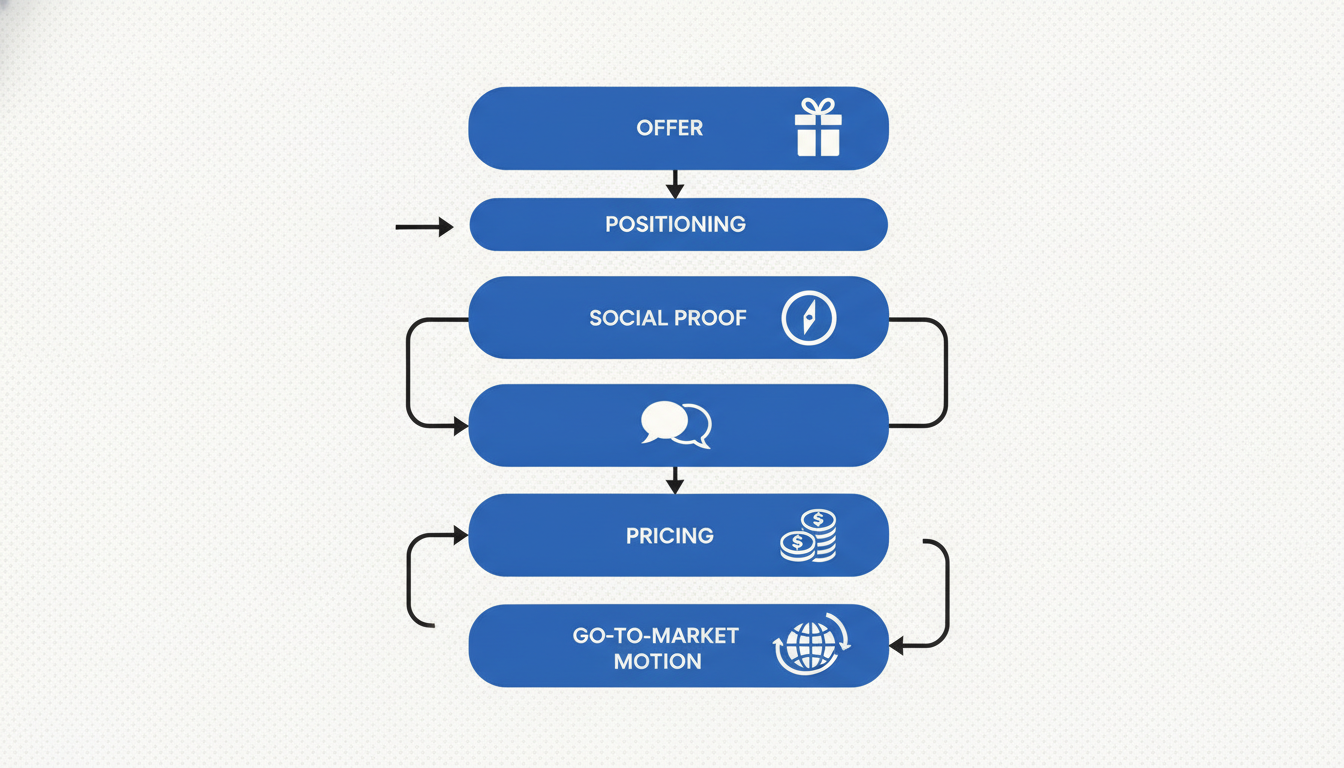
Most teams think product analysis means listing features side by side. That is table stakes. A useful analysis answers five questions:
- Who is it for? (ICP, use case, company size)
- What job does it solve? (outcome, not feature list)
- How is it priced and packaged? (tiers, limits, add-ons)
- How do customers talk about it? (reviews, case studies, complaints)
- How do they market it? (channels, hooks, ad creative, content cadence)
That last question is where most spreadsheets fall short. A competitor can have a weaker product and still win mindshare because they market it better on Instagram, TikTok, or paid social.
In our analysis of 200+ competitor intelligence workflows at DTC brands and agencies, the go-to-market layer (step 5) is skipped by roughly 70% of teams. They document what the product does, then stop. The teams that close deals off CI are the ones reverse-engineering how the competitor sells, not just what they sell.
How we built this framework
We designed this for marketing teams and agencies who need answers in hours, not weeks. When we first started running CI sprints for clients, every framework we found required either expensive enterprise tools or days of manual research. Neither worked for a 3-person marketing team with a live campaign.
Each step below maps to something you can verify without enterprise research budgets:
- Public sources first: pricing pages, changelogs, review sites, social profiles
- Social and ads layer: how the product is positioned in the wild
- Action output: what to change in your messaging, content, or offers
Where we recommend a tool, we note what it does well and where it stops.
"Competitor product analysis isn't a one-time slide. It's a living workflow. In fast-moving markets, the gap between shipping a feature and competitors copying your positioning has shrunk from months to weeks. The teams that stay ahead treat CI as a monthly cadence, not a quarterly project." - Pengu Insights CI Framework
Step-by-step: analyze a competitor product
Step 1: Map the offer
In 2026, most SaaS and DTC brands update pricing quarterly. Open their pricing page and product tour today: not last month's screenshot. Document:
- Plan names and price points (confirm on their site, pricing changes often)
- Core features per tier
- Limits (users, credits, exports, integrations)
- Free trial or freemium hooks
Output: a one-page offer map you can share with sales and product.
Step 2: Decode positioning
Read their homepage, ads, and top landing pages. Look for:
- Primary headline promise
- Who they call out (agencies, enterprise, creators, etc.)
- Proof points (logos, stats, testimonials)
- Differentiators they repeat
Output: a positioning snapshot: "They win on X, we win on Y."
One pattern we see constantly: a competitor's homepage says "the all-in-one platform" while their ads say something far more specific ("track your competitors' TikTok hooks in under 5 minutes"). The ads are always more honest about what actually converts. Read them before you read the homepage.
Step 3: Mine social proof
Check G2, Capterra, App Store reviews, and Reddit threads. Sort feedback into:
- Praise themes (what buyers love)
- Pain themes (what buyers complain about)
- Switching triggers (why people leave)
Output: 3-5 quotes you can use in competitive messaging (with attribution).
Step 4: Track how they market the product
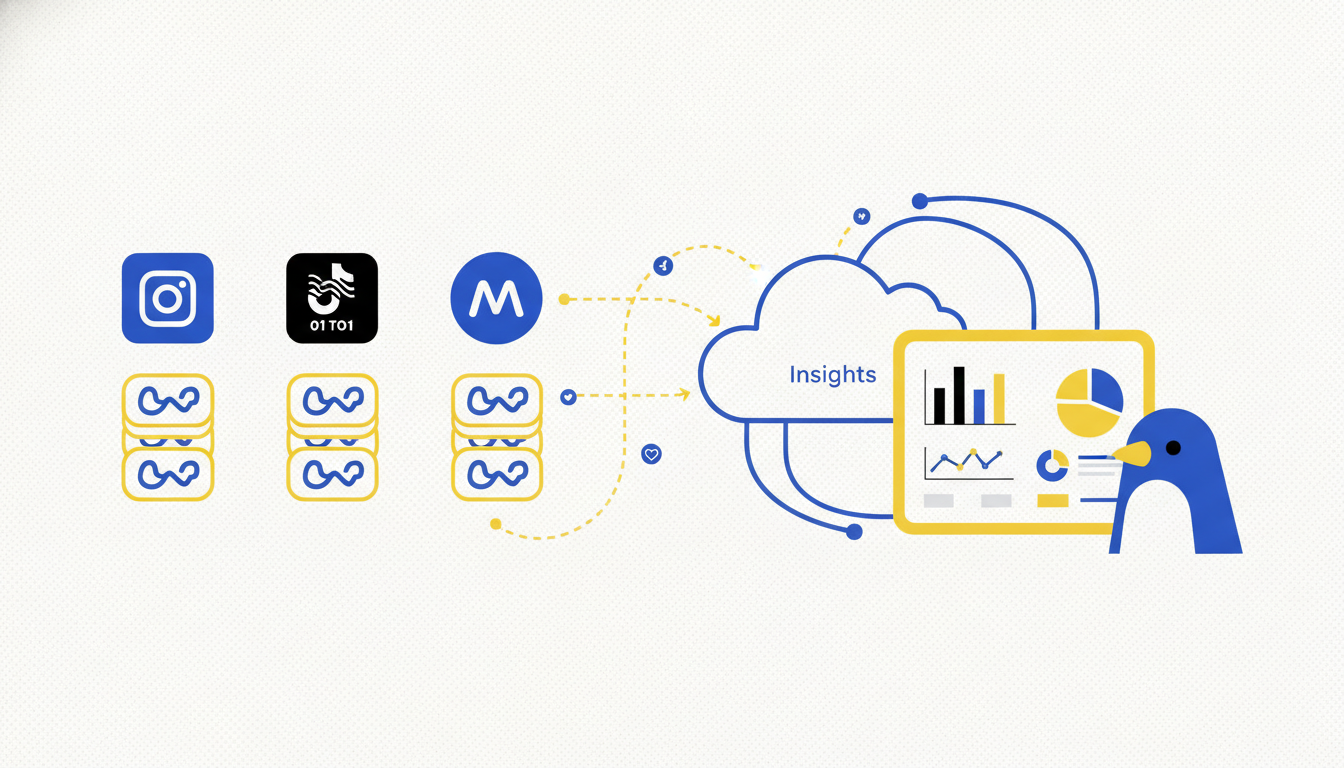
This is the step most CI playbooks skip. In 2026, 61% of marketing organizations use AI or ML to automate portions of this monitoring (Gitnux, 2026). Study:
- Organic content themes on Instagram, TikTok, LinkedIn, YouTube
- Paid ad angles in Meta Ads Library
- Launch cadence (how often they push new features)
- Content formats that get engagement
Output: a short playbook of what's working in their go-to-market.
Step 5: Turn insights into action
Close every analysis with decisions:
- Messaging adjustments for your site or ads
- Content angles to test this month
- Sales talk tracks for common objections
- Product gaps worth prioritizing (if you own product)
Tools that help (and where they stop)
Pengu Insights: best for social and ads product marketing intel
Pengu Insights is built for teams who need to see how competitors sell their product on social and paid channels. Paste a competitor URL and get their content patterns, hooks, and ad creative in minutes.
Best for: DTC brands, agencies, and marketers who care about go-to-market, not just feature matrices.
Pros:
- Analyzes competitor content across Instagram, TikTok, YouTube, LinkedIn, Facebook
- Meta Ads Library integration for paid creative
- AI pattern detection for hooks and formats
- Free plan (30 credits/month) and white-label PDF reports on Pro
Cons:
- Not a web traffic or SEO tool (use SimilarWeb or SpyFu for that)
- Focused on social and ads, not enterprise battlecard workflows
Pricing: Free ($0/mo), Pro ($39/mo), Team ($69/mo). See full pricing.
Crayon / Klue: best for B2B battlecards
Enterprise CI platforms built for sales enablement and battlecard maintenance.
Pros: Deep B2B workflows, win/loss integration, team distribution Cons: Expensive, battlecards still go stale if refresh cycles are slow (Wynter, 2026) Pricing: Enterprise, typically $1,000+/month
SimilarWeb / SpyFu: best for web and search context
Useful for traffic estimates, top pages, and keyword overlap.
Pros: Strong web analytics and SEO data Cons: Weak on Instagram/TikTok creative and paid social angles Pricing: Varies; entry tiers often $100-200+/month
Manual stack (free)
Website, pricing page, review sites, Google Alerts, and native social profiles. Enough to start, but slow at scale.
Competitor product analysis template
| Dimension | What to capture | Source |
|---|---|---|
| Target customer | ICP, vertical, company size | Homepage, case studies |
| Core promise | Main outcome they sell | Headlines, ads |
| Pricing | Tiers, limits, trial | Pricing page |
| Strengths | Top praise themes | Reviews |
| Weaknesses | Top complaints | Reviews, support forums |
| GTM motion | Channels, cadence, top formats | Social, ads, email |
| Your move | Messaging, content, or product action | Your team |
Copy this into Notion or Google Sheets and reuse for every competitor you track.
Frequently asked questions
What is competitor product analysis?
Competitor product analysis is the process of breaking down a rival's offer, positioning, pricing, and go-to-market motion so you can spot gaps, threats, and opportunities for your own product and marketing.
What should I look at when analyzing a competitor product?
Start with the core job the product solves, then compare features, pricing tiers, target audience, messaging, reviews, and how they promote the product on social and paid channels.
What tools help analyze competitor products?
For social and ads intelligence, Pengu Insights shows how competitors promote products across Instagram, TikTok, and Meta Ads. For web and SEO context, SimilarWeb and SpyFu are common complements. For B2B battlecards, Crayon and Klue are enterprise options.
How often should I refresh competitor product analysis?
For fast-moving markets, review top competitors monthly and run a full refresh every quarter. In B2B SaaS, battlecards often go stale within 90 days if you only update them twice a year.
Can I analyze a competitor product for free?
Yes. Start with their website, pricing page, app store reviews, and social profiles. Pengu Insights offers a free plan with 30 credits per month to analyze how competitors market products on social and ads.
Start with one competitor this week
Pick your top rival. Run the five steps above. Spend 30 minutes on their offer and reviews, then 20 minutes on how they market the product on social.
Pengu Insights lets you analyze your first competitor free. Paste their URL, see what's driving engagement, and turn it into a playbook your team can use.
Or explore our free tools if you want a lightweight starting point before committing to a full analysis.
Written by

Founder of Pengu Insights. Competitive intelligence practitioner for DTC brands and marketing agencies.