If your videos stall, it is often not "bad content." It is mismatched discovery.
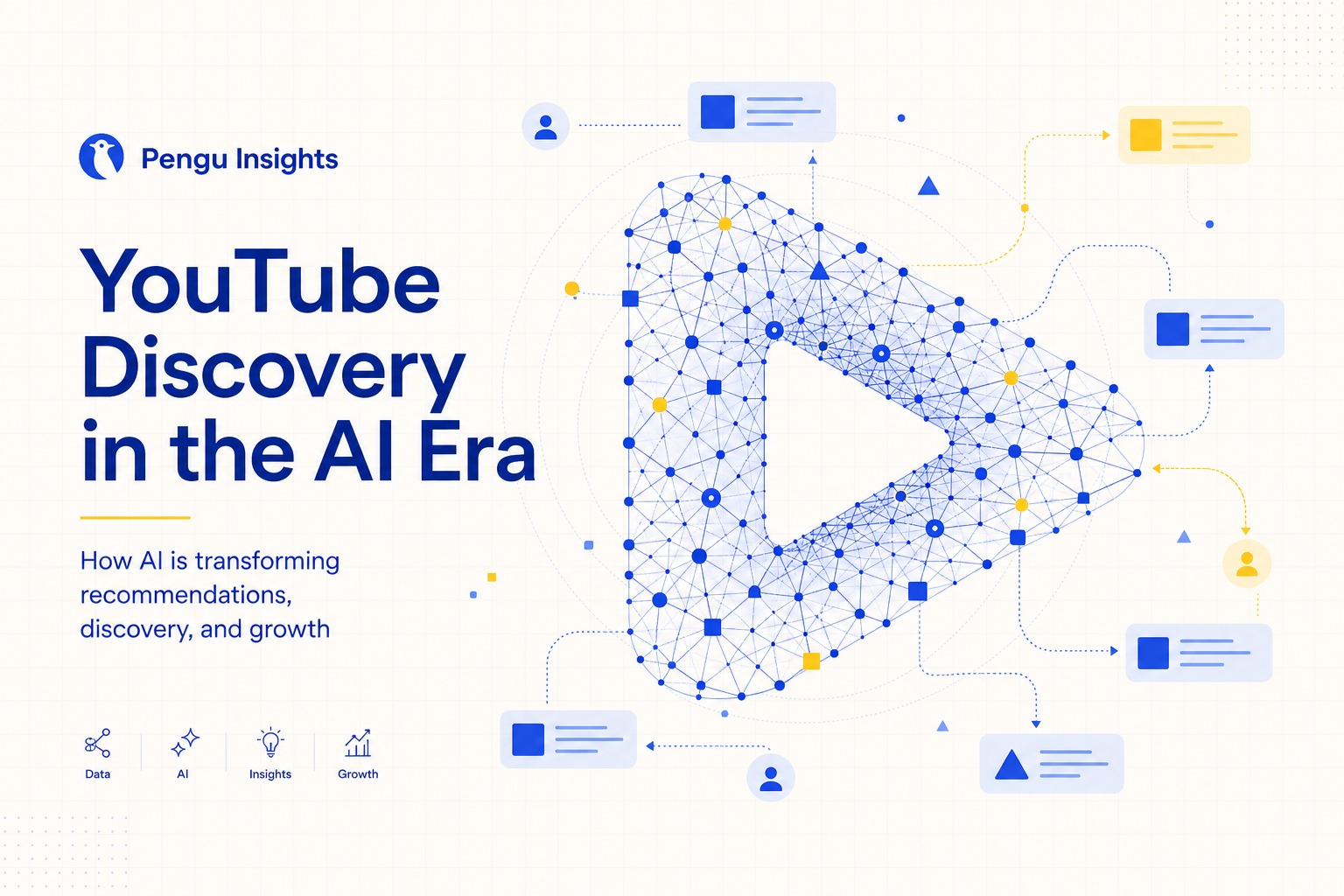
YouTube remains one of the largest search and recommendation surfaces on the internet. Shopify noted YouTube surpassed 2.7 billion monthly active users by early 2026 and generated about $60 billion in revenue in 2025 (Shopify, 2026). AI changed how the platform understands videos, not whether SEO matters. Titles, topics, and viewer satisfaction still decide who gets found.
This guide covers YouTube SEO in the AI era for marketers: what still works, what wastes time, how satisfaction ranking works, and how to research topics before you hit record. Pair it with our broader social media SEO guide when you need cross-platform tactics.
Key takeaways
- SEO is not dead. Stuffing is. Keywords still shape titles and scripts; tags barely matter.
- Two stages win: packaging CTR first, viewer satisfaction second.
- Satisfaction outranks raw watch time in 2026 recommendation talk among creators and analysts.
- Research before recording. Autocomplete verifies demand better than guessing.
- Study competitor outliers. Improve proven topics instead of inventing cold ones.
What is YouTube SEO when AI understands the whole video?
YouTube SEO still means helping the platform answer three questions: what is this video about, who is it for, and will people enjoy it? That core did not change. The depth did. YouTube now analyzes spoken words, on-screen text, visual elements, viewer behavior, and creator consistency, not only title, description, and tags.
In 2025, YouTube expanded Gemini-powered experiences across recommendations and in-video learning tools. Shopify reported that by December 2025, one million channels used YouTube AI creation tools daily, and more than 20 million viewers used Gemini-powered Ask features while watching (Shopify, 2026). The practical takeaway for marketers: your script is metadata. Say the topic clearly. Show it on screen. Deliver the promise fast.
We treat YouTube like a library with a ruthless librarian. If the cover (title and thumbnail) lies, or the chapters waste time, the book gets shelved. AI made the librarian better at reading the pages, not kinder to clickbait.
Do keywords and tags still matter for YouTube SEO?
In 2026, the clean split is this: keywords still matter, tags mostly do not. Keyword stuffing is outdated. Natural reinforcement across title and spoken content is not.
| Element | Influence in 2026 | What to do |
|---|---|---|
| Title | High | Include the primary phrase naturally |
| Spoken script | High | Say the topic and related intents clearly |
| On-screen text | High | Reinforce the promise early |
| Description | Moderate | Context and chapters, not stuffing |
| Tags | Low | Optional housekeeping, not a ranking lever |
| Filename keywords | Near zero | Stop renaming files as a "hack" |
Rise at Seven reported YouTube SEO search interest up 108% year over year as marketers chased non-Google discovery (Rise at Seven, 2025/26). More competition for video SEO means clarity beats tricks. Write for humans first. Let AI indexing follow the language people actually use.
How does viewer satisfaction rank videos in 2026?
YouTube has emphasized viewer satisfaction for years. In 2026, creator and analyst coverage widely describes satisfaction signals sitting above raw watch time in recommendation priority (OutlierKit, 2026; Shopify, 2026). The useful mental model is still two stages.
Stage 1: Pre-satisfaction (get the click)
CTR (click-through rate) is packaging quality: topic, title, thumbnail. No click means no chance to satisfy. Healthy long-form CTR often lands around 4% to 6% for many established channels, with wider ranges by niche and audience size (Tukey AI summary of 2026 benchmarks, 2026). High CTR with instant bounce is still a failure.
Stage 2: Viewer satisfaction (earn distribution)
Five practical satisfaction factors marketers should track:
- Watch pattern: Did people abandon early or stay through the answer?
- Session time: Did the video keep people on YouTube longer?
- Post-watch behavior: More videos, subscribe, suggested clicks, or bounce?
- Feedback signals: Likes, comments, surveys, "interested / not interested."
- Intent fulfillment: Especially for search, did viewers stop hunting for a better answer?
Relative retention versus similar videos in the niche matters more than absolute length. A tight 6-minute answer can beat a padded 18-minute video.
What YouTube SEO tactics are a waste of time now?
Skip the cargo-cult checklist. These still get taught and still underperform:
- Over-obsessing over tags
- Copying competitor tags wholesale
- Keyword stuffing titles until they read broken
- Keyword stuffing descriptions
- Naming the video file with the keyword phrase as a ranking hack
- Buying fake views or engagement
Focus on satisfaction, not theater. If a tactic does not change what viewers experience in the first 30 seconds or whether the question gets answered, drop it.
Which YouTube SEO strategies still work for marketers?
1. Research before you press record (20 minutes)
Guessing is dead. Keyword research is not. Use YouTube autocomplete on desktop. Type a seed like "how to plant" and note suggested completions. If YouTube suggests it, demand exists. Confirm volume and competition with a research tool when budgets allow. Then write the title around a verified phrase.
2. Package for honest CTR (30 minutes)
Promise what the video delivers. Specific beats clever. "I tried body sculpt leggings: honest review" outperforms vague lifestyle titles when search intent is review-led. A/B thumbnails when the topic already has demand.
3. Write scripts AI can understand (during filming)
Say the primary topic in the first 30 seconds. Repeat related phrases where natural. Add on-screen text. Use chapters. First-30-second retention is widely treated as a core early signal because it predicts later satisfaction (OutlierKit, 2026).
4. Study competitor outliers (25 minutes)
Find videos that outperform a rival channel's baseline. Note title patterns, length, hooks, and comments. Improve the answer rather than cloning the packaging. For a wider competitive set beyond YouTube, use examples of competitors and competitor product analysis.
5. Build topical authority over time
One viral hit helps. Consistent answers in a niche help more. YouTube trusts channels that repeatedly satisfy a defined audience. Plan clusters, not isolated uploads.
How should marketing teams connect YouTube SEO to competitive intelligence?
YouTube is a channel. Competitors publish there on purpose. Track which rival videos keep ranking for your category queries, which hooks they reuse, and which products or offers they push in descriptions. That intelligence should feed your editorial calendar the same way Meta Ads intelligence feeds creative tests.
Cross-link your stack:
- Platform SEO tactics: this post and the social media SEO guide
- Measurement tools: social media analytics tools
- Mentions and conversation tracking: social media monitoring tools
- AI citation beyond YouTube: GEO
When you need competitor content patterns across YouTube and other networks in one place, Pengu Insights sits in that CI layer. Use it to spot topic gaps, then apply the ranking rules above when you publish.
How do Shorts and long-form fit the new YouTube SEO rules?
Shorts and long-form increasingly compete in separate discovery lanes. Format-aware recommendation means a strong Short does not automatically lift every long video, and vice versa. Marketers should plan two content tracks with shared topic clusters.
Use Shorts to validate hooks and language (15 minutes to cut from a long video). Use long-form to fulfill intent and earn session value. If a Short's comment section repeats the same question, that question becomes the next long-form title. If a long-form chapter outperforms the rest of the video, turn that chapter into a Short and a standalone upload.
Shopify's 2026 algorithm overview also stresses predictive retention and viewer journey continuity: YouTube prefers paths that keep people watching related content, not dead-end one-offs (Shopify, 2026). End screens and playlists are still useful when they extend a satisfied session. Forced cliffhangers that break the promise hurt satisfaction scores.
In our channel audits, the teams that grow steadily treat Shorts as demand probes and long-form as authority assets. The teams that stall treat Shorts as a lottery and long-form as a dumping ground for every keyword they want to rank for.
What should marketers do next with YouTube SEO?
Audit your last ten uploads. Which ones earned search traffic versus browse? Rewrite one underperforming title and thumbnail for a verified autocomplete phrase. Rescript the intro of your next video so the answer starts by second 20. Then schedule a weekly competitor outlier review.
Want a live session on AI workflows for marketing teams, including content and competitive research? Join penguinsights.io/webinar/marketing-ai.
Related reads: social media SEO guide 2026, dominate AI search results, and SEO automation with AI agents.
To research what ranks on YouTube for a topic and pull the transcripts, use the YouTube tools in Pengu Insights. Free plan, no card.
Frequently asked questions
Is YouTube SEO dead because of AI?
No. Headlines overstate the shift. Keywords still matter in titles and spoken content. What died is keyword stuffing and tag obsession. YouTube's AI now understands topic, intent, and satisfaction more deeply, so clear packaging plus strong viewer experience outperforms old metadata tricks.
Do YouTube tags still matter in 2026?
Minimally. Tags are backend metadata with little ranking impact for most videos. Put your energy into the title, thumbnail, spoken script, on-screen text, and whether viewers stay satisfied after the click. Copying competitor tags is usually wasted time.
What ranks videos on YouTube now?
Two stages: get the click (CTR via topic, title, thumbnail), then satisfy the viewer. Satisfaction signals include watch behavior, session continuation, post-watch actions, feedback, and intent fulfillment. In 2026, many creators and analysts report satisfaction sitting above raw watch time in the recommendation hierarchy.
How should marketers do YouTube keyword research?
Start with YouTube autocomplete on desktop to verify demand. Confirm related phrases with a research tool if needed. Put the primary phrase in the title naturally and reinforce it in the script. Do not guess topics. If autocomplete never suggests your phrase, demand may be too thin to justify the video.
How does competitor research help YouTube SEO?
Competitor videos reveal proven titles, packaging patterns, and topic gaps. Study outliers that outperform a channel's average views, then improve the answer quality and packaging. Pair YouTube research with broader social competitive intelligence so your video topics match what rivals already prove across platforms.
Written by

Founder of Pengu Insights. Competitive intelligence practitioner for DTC brands and marketing agencies.